Heraldry: more than just logos for nobles
Heraldry can help with family history research, and there are many sources freely available online.
Comments Off on Heraldry: more than just logos for nobles
19 Feb 2020

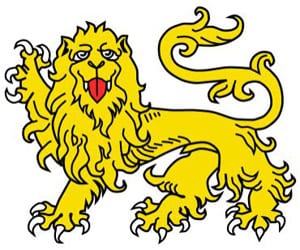
Heraldry can help with family history research, and there are many sources freely available online.
Reading Branch meeting 30th January 2020 Speaker: Simon Burbidge Simon spoke of his research into his ancestors who had been divorced by the time of the 1901 census. Prior to 1858 Divorce was subject to Ecclesiastical Law with basically consummated or unconsummated marriage. It required an Act of Parliament and grounds were usually separation, civil suit or adultery. Only 2 divorces a year were recorded in 1670, 322 between 1670 and 1838 and in 1900 there were 560 with only three women suing for divorce. Notable cases from past were 1804 De Manville which involved custody of a child, it was ruled that a child belonged to father unless in danger of being harmed. Other cases included Lord Melbourne the Prime Minister and Caroline granddaughter of Richard Sheridan. Palmerstone re launched a Bill in 1855 which became Law in 1858. In 1920 Legal aid became available for Divorce. Details are available online in Ancestry TNA index J77 / 78. This was a very…
Report on Presentations by Members by Bryan Pledger The story my sister told me by Peter Beaven Peter started with “Once upon a time” and said “when my cousins came to see us they used to talk about Budleigh Salterton. His sister had a story about this family that a mother and daughter travelled by coach and stayed overnight. The young lady was in a four poster bed and during the night she left the room and then came back but in the morning found there was a man in her bed so they had to get married. He discovered the birth of Mary Strickland on the LDS Family Search web site which stated she was born in Buddleigh Salterton but baptised in St Michael Paternoster Royal London. Actually she was registered at the Methodist Register Office in Paternoster Row, near St Paul's. In the memoirs of Charles Gardner it talks about the marriage of Grace Lea who stopped the night at Salisbury and…

At the Newbury Branch January 2020 meeting Ellie Thorne of the Berkshire Record Office outlined the history of the Plenty company, an innovative and successful engineering firm founded at the turn of the nineteenth century. Lifeboats, steam engines, boilers, pumps, diesel engines and even a delivery van were produced at Plenty's Eagle Ironworks in the heart of Newbury.
Reading Branch meeting 12th December 2019 Speaker: Members There were two short talks by members, a Berkshire dialect quiz from Vicki and the traditional non-alcoholic mulled wine and mince pie courtesy of Rosemary and Angie. Angie Catt spoke about her great-grandfather John Gibbons (West) born in Bath who enlisted in the 12th Prince of Wales Lancers in 1849 in Reading. At his attestation he was stated as being eighteen and a half, and five feet nine inches tall. He was involved in the 8th Kafir War which was the longest military action in Africa lasting 100 years. It was actually nine wars in the Eastern Cape where Smith was disgraced and dismissed. He survived the sinking of HMS Birkenhead where the first use of the command “Women and Children first” was issued in 1852. His military career took him from battles with the Xhosa in Africa; Crimea 1845, Sevastopol 1855 and his last campaign was in the Indian Mutiny 1857. Retiring after 12…
Reading Branch meeting 28th November 2019 Speaker: Antony Marr Speaking from a background of an ex Deputy Registrar he gave an interesting insight of what can be found on these certificates. The rules surrounding these certificates are covered by a 150-page instruction book. Original certificates will have original signatures; the GRO (General Register Office) version is a copy of a copy. Four checks are done on birth certificates (not telling the truth is purjury) 1. Live birth computer check with hospital/midwife (no still births) 2. Correct district 3. Within time limit (Registrar 12 months, parents 42 Days) 4. Not already registered. Informants a) Who signed? b) their qualification c) Address of the informant. Who can sign, i) Mother, ii) Father, if married (not unmarried fathers), iii) Occupiers of the premises where birth occurred, iv) Anyone present at birth, v) Person in charge of child. Childs surname is specified since 1969 and from 1950 put in capital letters. Today any surname is possible not…
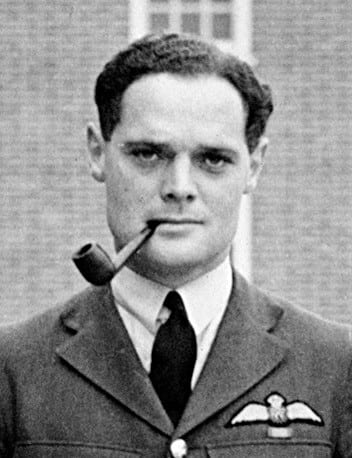
'Heroes of Woodley Airfield' talk by Joy Pibworth. Many key figures in aviation history have ties with Woodley and this fascinating talk used the names of streets as the basis of their stories.
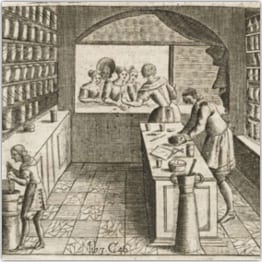
Whilst the physicians and surgeons of Georgian times were technically regulated by their professional bodies, standards of training and practice were unenforceable. Itinerant “doctors” moved from town to town, dispensing miracle cures for all diseases
Reading Branch meeting 31st October 2019 Speaker: Tony Keep from Thames Valley Police Museum Tony started his research to commemorate what was thought to be 47 policemen lost in WW1, but actually turned out to be 49. At the time of WW1 eight forces existed covering the area now known as Thames Valley force. In his research he used Examination Registers which were kept manually, records from Berkshire and Buckinghamshire Records Offices, Chief Constables Reports, Standing Joint Committee Reports, Watch Committee minutes and books or newspaper reports. Additional material was gathered from the Thames Valley Museum, The National Archives and the Internet. The first Police Force was the Metropolitan founded in 1829 and following Acts of Parliament in 1835 and 1839 became a paid force. In 1856 National Government legislation saw a change in how the force was organised. County Police Forces controlled by Standing Joint Committees under a Chief Constable and Borough Police Forces under Watch Committees with Head Constables. In 1914…
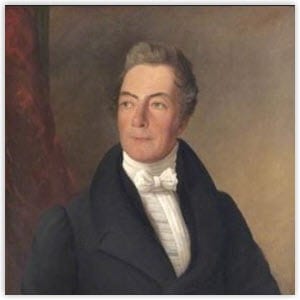
Around 1820 the Prince Regent, about to become George IV, decided that Windsor Castle should be rebuilt as a royal residence. The contract for the work was awarded to Robert Tebbott. The original estimate of £120,000 soared to £1.2 million.
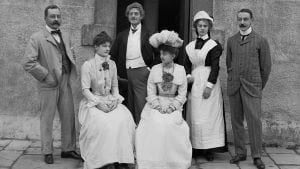
Reported by Christopher Singleton The Edwardian Era, sometimes referred to as the Golden Era, spanned the years from the death of Queen Victoria in 1901 to the outbreak of the First World War in 1914. Tony King’s talk provided a framework to this period, from early Victorian times to 1918, with a wealth of images, film and sound. Queen Victoria, Prince Albert and Prince Edward, born in 1841 and later King Edward VII, were guests of Napoleon in Paris. Edward, who had a constrained existence in Windsor, was enthralled by Paris and wanted to stay. However, he did travel to Canada, USA, Edinburgh, Oxford and Cambridge. Whilst attending Cambridge in 1861, an affair involved the intervention of Prince Albert. Albert contracted a fever from this visit from which he died and for which Victoria never forgave Edward. Edward, whose London home was Marlborough House, became known as the “Prince of Pleasure” with his country house parties, shooting and fishing. He was keen on…
Reading Branch meeting 26th Sept 2019 Speaker: John Leighfield John opened his talk with an anecdote about Einstein and his chauffeur which set the pace and delivery for the evening. He informed the gathering that the earliest maps were around 6000 BC from Turkey, then from 1400 BC Italian wall carving and then 6th century BC from a tablet found in Babylon. Important dates from Britain were 150AD Ptolemy, (1480 print shown) and Matthew Paris 1250. Richard Gough was a notable collector and writer who left a c1360 map to the Bodleian Library which he had purchased in 1774 for half a crown. The big changes came in the 16th century which were brought about by the revolutionary things of printing, military threat (Spanish), the development of surveying as a profession (Henry VIII and Elizabeth I). Christopher Saxton from Leeds in Yorkshire deserves greater recognition. In 1570 he was granted a monopoly by the Elizabethan Court for 10 years on map production. By 1574…