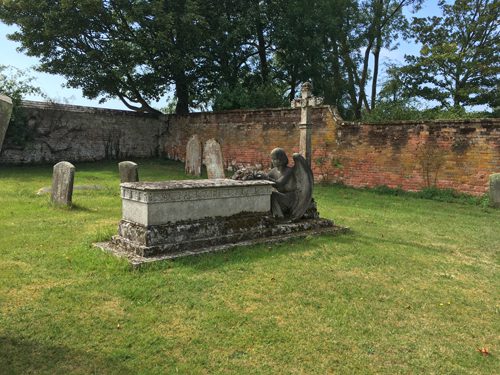
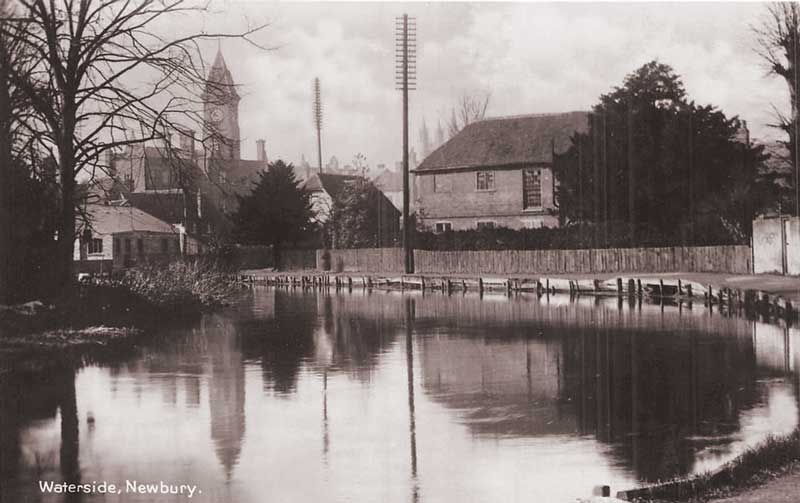
Waterside Chapel, Newbury
Waterside chapel, Newbury

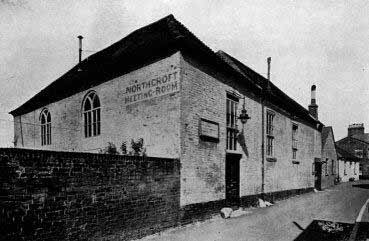
Lost churches and chapels of Newbury

Nonconformism flourished in Newbury after the Reformation, with a proliferation of sects which split, merged and reshaped themselves over the eighteenth and nineteenth centuries.

Comments Off on Lost churches and chapels of Newbury

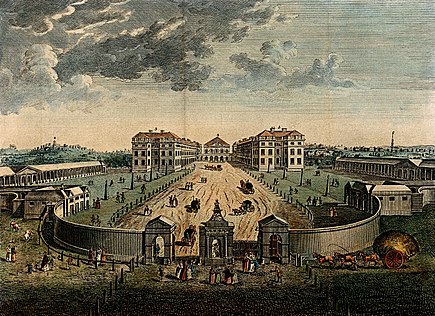
The Foundling Hospital and Newbury

Thomas Coram's Foundling Hospital opened in 1740 to care for babies abandoned in the streets of London. Many of them were sent to be nursed in Newbury, under a scheme organised through aristocratic patronage, middle-class networking and working-class philanthropy.

Comments Off on The Foundling Hospital and Newbury

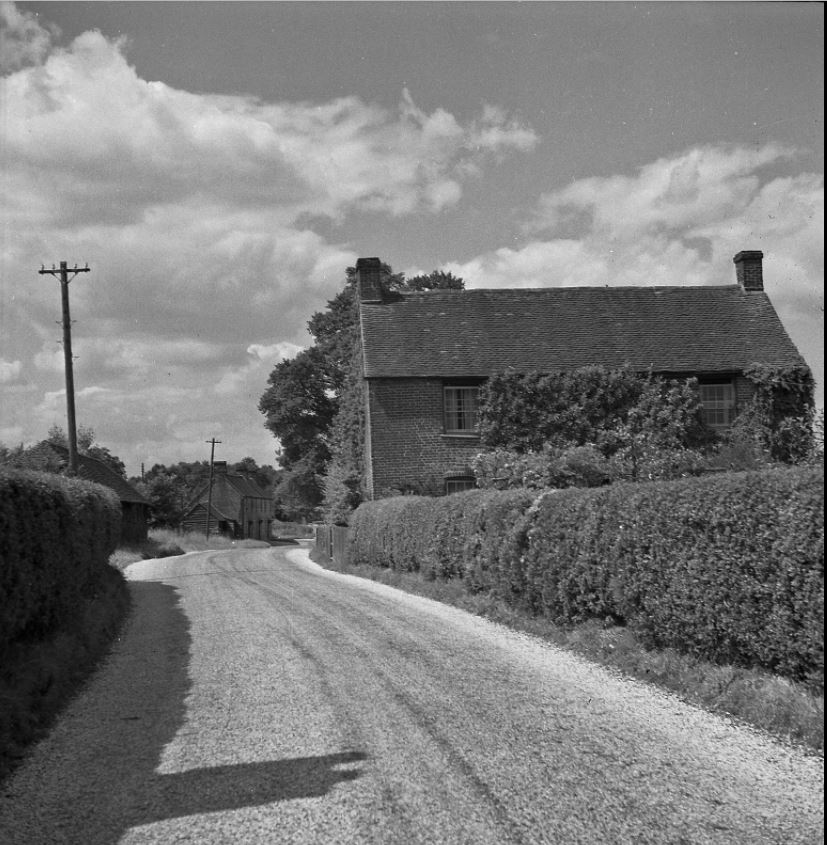
Tracing a house history

Sources for tracing the history of a house may range widely over maps, pictures, censuses, old newspapers, directories and many more records to build up a holistic picture of a house, its occupants, owners and its place in the local community.

Comments Off on Tracing a house history

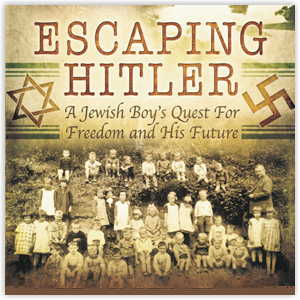
Escaping Hitler: a Jewish boy’s quest for freedom

The life-story of Günter Stern/Joe Stirling, who came to Britain aged 14 in 1938 via Kindertransport, and became a prominent and much-loved figure in post-war Norwich.

Comments Off on Escaping Hitler: a Jewish boy’s quest for freedom

The Cope Hall Colony

The Cope Hall Colony was a social experiment which lasted from 1917 to 1919. Though short-lived, it had lasting influence on the probation service.

Comments Off on The Cope Hall Colony

Where there’s a will, there’s usually an argument

Reading Branch meeting 29th September 2022 Speaker: Sue Ellis Sue took us on a liberally illustrated look at wills, what they look like, what terminology they include and what information they can give a family historian. Wills were first recorded by the ancient Greeks mainly to explain how to dispose of a person's estate of there were no male heirs. Roman wrote wills too. 272-337AD saw the start of the church's involvement in wills. From the Middle Ages, there are two wills still in existence, those of King Alfred and his nephew. During this time wills were proved exclusively by ecclesiasts. Wills have been used to estimate that 60% of the country's population of 60,000 died in the black death. Wills cover land (real estate) which id 'devised' to beneficiaries, and personal estate (belongings, jewellery, clothes, furniture, etc.) which is 'bequeathed'. Prior to 1837, wills that included real estate only covered land that belonged to the testator up to the date of the…

Comments Off on Where there’s a will, there’s usually an argument

West Berkshire war memorials

The years immediately after the Great War saw the greatest impetus for erecting war memorials, but there was no co-ordinated programme, resulting in no national pattern or model; each community made its own decisons. Memorials served as a focus for bereaved families for whom there was no known grave.

Comments Off on West Berkshire war memorials

- End -

No more pages to load